
Drill rig and protected work zone
Show access, utility markings, spoil control and the relationship to the home.
COMPACT CLOSED-LOOP DESIGN
Deep, narrow boreholes exchange heat with the earth while preserving most of the usable yard. The small surface footprint makes vertical loops a frequent retrofit choice.
GOOD STARTING FIT
Smaller lots, established landscaping, limited trench area, and projects where drilling access can be safely established.
Vertical bore is one of the closed-loop types currently included in this site’s preliminary WaterFurnace PremiumPath screen. Final program eligibility still depends on equipment, engineering, property, credit, documentation and current PremiumPath/Palmetto rules.
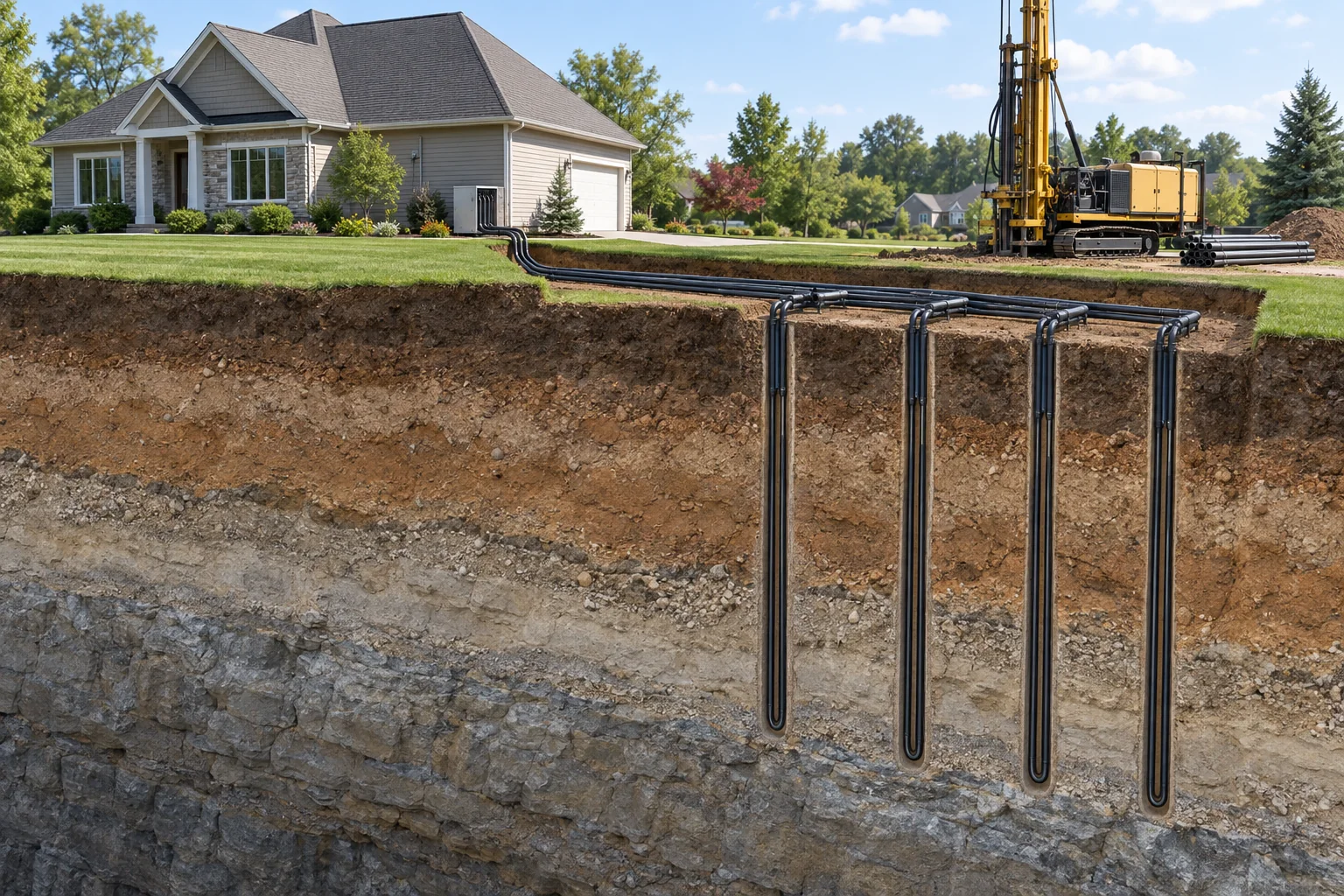
A simplified, not-to-scale view of how vertical U-bend loops and headers may relate to a home. This is not a West Jefferson jobsite photo or an engineered layout.
INSTALLATION SEQUENCE
A loop designer establishes required bore depth, bore count, spacing, fluid flow and circuiting from the building load, equipment and ground assumptions.
A licensed or qualified drilling contractor advances each bore, installs a factory U-bend pipe assembly, and completes the specified grout from bottom to top.
Headers connect the bores to the building. The field is flushed, purged and pressure-tested before final connection and commissioning.
PROS
TRADEOFFS
FIELD DOCUMENTATION
A useful project record shows the parts of the loop installation that affect access, performance, restoration and future service. These are the field views we document for this loop type.
Show access, utility markings, spoil control and the relationship to the home.
Document materials and installation details before they are concealed.
Pair test evidence with a finished-yard view and final as-built notes.
SITE VERIFICATION
FROM SCREENING TO SITE DESIGN